• Home
  • About
    • What is PACE?
    • Executive Director
    • Official Partners
  • Power Politics
    • Barack Obama
    • Newt Gingrich
    • Ron Paul
    • Mitt Romney
    • Rick Santorum
  • Blog
  • News
    • News
  • Renewable Energy
    • Solar
    • Wind
    • Hydroelectric
    • Biomass
    • Geothermal
    • Landfill Gas
  • Multimedia
    • Video
    • Audio
    • Photos
  • Contact
 
  Older Entries »

More Questions for EPA on Regulations

Leaders of the House Energy and Commerce Committee last week requested more answers from the Environmental Protection Agency (EPA) on the potential negative consequences of its new Utility MACT regulation. In a letter to Administrator Lisa Jackson, signed by committee chairman Rep. Fred Upton (MI) and thirteen other members, the committee once again asked EPA to calculate the full cost of the regulation, which requires expensive capital upgrades at coal-fired power plants. EPA finalized the Utility MACT rule on December 16, 2011.

The letter states that the Regulatory Impact Analysis provided by EPA “does not provide a total cost of the regulation, but only a share of those costs assigned to three select years from costs that are amortized over 30 to 40 years.” PACE has argued that EPA’s cost estimate of $11 billion for Utility MACT is far too low and is probably closer to the estimate of $300 billion from the Energy Information Administration.

In addition, the committee also asked EPA to clarify its initial cost estimate for Utility MACT, as the agency’s original estimate assumed that the Cross-State Air Pollution Rule would already be in effect. A court recently issued a stay on the EPA rule until its legal merits could be determined.

In recent days, at least one major American power producer has felt the effects of aggressive new EPA regulations. FirstEnergy announced last week it would retire six coal-fired power plants in Ohio, Pennsylvania, and Maryland in an effort to comply with pending environmental regulations.

“It has been clear for some time that EPA’s new regulations are aimed squarely at making America’s coal-fired power fleet too expensive to operate,” said PACE Executive Director Lance Brown. “The agency and others scoffed at estimates that new rules could retire 50,000 megawatts of power generation, but the count to date is 27,000 megawatts and growing. Unfortunately for American families and businesses, the net effect will be higher power rates and endangered reliability.”

February 1st, 2012 | Category: Index, News |

PACE Responds to State of the Union

In response to the president’s State of the Union address Tuesday evening, the Partnership for Affordable Clean Energy released an official statement detailing  its concerns regarding energy affordability and reliability. An excerpt of that statement appears below.

“In his State of the Union preview, President Obama indicated his plans to lay out a ‘blueprint for an American economy that’s built to last.’ But unless that blueprint includes overturning recent regulations implemented by the Environmental Protection Agency, our economy will continue to suffer. While President Obama and the EPA continue to defend new rules – like Utility MACT – consumers can look forward to higher costs and less reliability.”

“Media reporting and commentary on environmental progress has overlooked glaring improvements in power sector emissions, leading the public to believe that American air is dirtier than ever when the exact opposite is true. If the president is truly serious about boosting the economy, his administration should reconsider implementing rules that will raise energy prices and cost millions of hard-working Americans their jobs.”

The president’s State of the Union address also included a number of soundbites on energy, including pledges to install renewable power on federal lands and to launch new initiatives to boost renewable power use in the military branch.

“Instead of focusing on common-sense initiatives that will lower the price of energy for Americans, the administration stubbornly continues to pursue renewable power experiments that make little sense in the current economic reality,” states PACE Executive Director Lance Brown. “If we’re going to move forward, we need energy policy based on reality rather than focus groups.”

January 25th, 2012 | Category: Index, News |

Groups to Sue EPA Over Coal Ash

According to multiple sources, a number of environmental groups have announced plans to sue the Environmental Protection Agency (EPA) over standards for the treatment of coal ash. The lawsuit will be filed under the Resource Conservation and Recovery Act, or RCRA.

Coal ash, a natural byproduct of the combustion process for coal-fired power plants, today is typically stored onsite at power plants or sold on the open market for use in the production of concrete and other materials. In 2010, EPA proposed a pair of regulatory approaches for dealing with coal ash, one under RCRA Subtitle D that states could adopt at their discretion and another under the hazardous waste Subtitle C that would place coal ash under a federally enforceable permitting program.

“The type of lawsuit has become pattern in practice for environmental groups whose real goal is to shut down fossil power in the United States,” explains PACE Executive Director Lance Brown. “The most stringent coal ash proposals could endanger the very viability of half the nation’s power production capacity. The EPA, seemingly unconcerned with reliability or cost issues, welcomes such lawsuits.”

Groups reported to have announced their plans to file suit are Earthjustice, on behalf of Appalachian Voices; Chesapeake Climate Action Network; Environmental Integrity Project; French Broad Riverkeeper; Kentuckians For The Commonwealth; Moapa band of Paiutes; Montana Environmental Information Center; Physicians for Social Responsibility; Prairie Rivers Network; Sierra Club and Southern Alliance for Clean Energy.

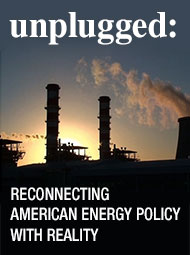
PACE has written extensively about coal ash regulation, citing a study published in June 2011 that found EPA’s regulatory proposals on coal ash could cause as many as 316,000 job losses and cost $110 billion over a 20-year period. A documentary released last year by PACE, entitled Unplugged, also deals with the coal ash issue, citing officials with TVA and elsewhere who fear that classification of coal ash as a hazardous waste would severely restrict options for coal ash storage, causing either the retirement of some coal-fired facilities altogether or a drastically higher cost for burning coal for electricity.

“The public needs to understand that half of the 130 million tons of coal ash being generated each year ends up in places like our roads and our carpet. The rest is being stored under close supervision,” says Brown. “There is a way to handle coal ash that protects the public while not taking half of America’s power generation off the grid. Let’s hope the courts and policymakers have the wisdom to acknowledge that fact.”

January 18th, 2012 | Category: Index, News |
 
  Older Entries »
Follow Us on Facebook
Follow Us on Twiiter
Find Us on Google+
Close

Read our Privacy Policy

search only PACE site

Copyright © 2012 | (PACE) Partnership for Affordable Clean Energy | A 501(c)(4) Organization | All Rights Reserved